






The Role of Custom 3D Modeling Services in Accelerating Product Development and Prototyping
In today’s fast-moving engineering and manufacturing landscape, agility isn’t just an advantage it's a necessity. Whether you're a startup refining its first physical product or a global manufacturer looking to reduce development cycles, one technology has become indispensable: Custom 3D Modelling Services.
Across the UK, USA, and global manufacturing hubs, organisations are adopting advanced 3D Modelling Services to bring products to market faster, reduce prototyping costs, eliminate design errors, and improve collaboration across teams. As industries shift toward digital workflows, immersive visualisation, and precision-driven engineering, custom 3D modelling has become the backbone of innovation.
This article explores why custom 3D modelling is rising in importance, how it accelerates product development, and the real-world benefits modern businesses are experiencing.
[edit] Why Are Businesses Prioritising Custom 3D Modelling Services?
The shift toward custom 3D modelling is driven by three core priorities:
- The need for faster product development cycles
- Increasing pressure to reduce design and manufacturing costs
- A demand for greater accuracy in both prototyping and production
Traditional 2D drawings or manual prototyping often create bottlenecks, miscommunication, errors in manufacturing, or delays in design approvals. Custom 3D models, on the other hand, allow teams to visualise products clearly before moving into production, making the process more predictable and efficient.
[edit] How Do Custom 3D Modelling Services Accelerate Product Development?
Custom 3D modelling enables teams to move from ideas to production-ready designs with greater speed and confidence. Here’s how:
[edit] 1. Faster Iterations Through Digital Visualisation
Before the digital era, prototyping required multiple physical samples, each costly and time-consuming. Today, 3D modelling allows designers and engineers to:
- View products from every angle
- Test design variations instantly
- Validate feasibility early in the process
According to a report by McKinsey, companies using digital 3D modelling and virtual prototyping can cut product development time by up to 50% (source).
This speed helps startups scale faster and allows established manufacturers to maintain a competitive edge.
[edit] 2. Reducing Production Errors and Miscommunication
Many manufacturing errors occur due to poor communication or incomplete 2D drawings. Custom 3D models solve this by providing:
- Full geometric visual accuracy
- Precise dimensions
- Clear component relationships
- Realistic assembly sequences
This makes it easier for engineers, machinists, clients, and suppliers to understand the design without ambiguity.
[edit] 3. Streamlining Collaboration Across Teams
Modern product development requires collaboration across multiple stakeholders:
Custom 3D modelling ensures everyone is working from the same detailed, accurate 3D digital representation.
Files can be shared across platforms, integrated into BIM or PLM systems, or used in real-time for virtual collaboration popular in UK and USA remote teams.
[edit] 4. Supporting Rapid Prototyping and 3D Printing
One of the biggest benefits of custom 3D modelling is its direct compatibility with prototyping technologies.
3D models created by a professional 3D Modelling Company can be exported:
- For 3D printing
- For CNC machining
- For mould design
- For simulation and testing
This reduces the transition time between digital design and physical evaluation.
[edit] What Industries Benefit Most from Custom 3D Modelling Services?
Custom 3D modelling is now used across almost every major manufacturing and engineering sector. Some leading industries include:
[edit] ✔ Consumer Product Manufacturing
Products like electronics, appliances, toys, and home goods depend heavily on 3D modelling for rapid prototyping and visual approval.
[edit] ✔ Automotive and Aerospace
Complex surfaces, assemblies, and engineering constraints require precision that only advanced 3D models can offer.
[edit] ✔ Furniture and Interior Design
Manufacturers, designers, and retailers use custom models for:
- Visualising new furniture designs
- Creating photorealistic renders
- Preparing technical drawings
- Supporting AR/VR product previews
[edit] ✔ Architecture and Construction
Custom 3D modelling supports structural visualisation, conceptual modelling, and detailed component design.
[edit] ✔ Medical Device Development
Accuracy is critical 3D models form the basis of simulation, testing, and prototyping medical parts.
[edit] How Does Custom 3D Modelling Improve Prototyping Workflows?
Prototyping is one of the most resource-intensive phases of product development. Custom 3D modelling makes it faster, cheaper, and more reliable.
[edit] 1. Lower Prototyping Costs
Physical prototypes cost thousands and often require multiple revisions.
With digital 3D models, companies can:
- Identify issues early
- Validate geometry
- Test manufacturing feasibility
- Get approval before a physical prototype is made
This significantly reduces rework.
[edit] 2. Enhancing Simulation and Testing
Before manufacturing, engineers can simulate:
- Load
- Stress
- Motion
- Thermal conditions
- Fluid flow
By using detailed 3D models, they can improve safety and functionality without building multiple prototypes.
[edit] 3. Preparing Designs for Manufacturing
Custom 3D models can be directly used for:
This seamless transition reduces manufacturing delays and surprises during production.
[edit] What Challenges Do Companies Face When Using Custom 3D Modelling?
While the benefits are clear, companies adopting 3D modelling also face challenges such as:
[edit] 1. Software Complexity
Tools like SolidWorks, AutoCAD, Fusion 360, and CATIA require specialised skillets. Many companies prefer outsourcing to a 3D Modelling Company to avoid training costs.
[edit] 2. Resource Constraints
Smaller businesses may lack:
Custom 3D modelling services provide access to expert-level modelling without heavy investment.
[edit] 3. Data Management
Large 3D files require proper storage, version control, and secure sharing, especially in remote teams across the UK and USA.
[edit] What Future Trends Are Shaping Custom 3D Modelling Services?
Modern product development is entering a more advanced digital phase. Here’s what’s shaping the future:
[edit] 1. Integration with AI and Automation
AI-powered modelling tools can assist designers by:
[edit] 2. AR and VR Product Visualisation
3D models are now used directly in:
- Virtual product showrooms
- Immersive design reviews
- Customer demo experiences
[edit] 3. Digital Twins in Manufacturing
3D models allow companies to simulate and monitor real-world performance, reducing risk and improving maintenance.
[edit] 4. Cloud-Based Collaboration
Teams can work simultaneously on the same model from anywhere in the world.
[edit] How to Choose the Right 3D Modelling Company?
When selecting a partner, consider:
- Industry experience
- Software expertise
- Sample work and portfolio
- Understanding of manufacturing standards
- Flexibility for revisions
- Turnaround speed
A reliable 3D modelling partner bridges the gap between design intent and manufacturability.
[edit] Conclusion
Custom 3D Modelling Services have become a cornerstone of modern engineering and product development. From startups to large-scale manufacturers, businesses rely on high-quality 3D models to:
- Accelerate design cycles
- Reduce production errors
- Improve prototype accuracy
- Enhance collaboration
- Reduce costs
- Increase innovation
As the global shift toward digital product development continues, companies that embrace 3D modelling will not only innovate faster but also outperform competitors.
If you're looking to unlock the full potential of 3D modelling, partnering with an experienced USA-based 3D Modelling Company can provide the expertise, tools, and support needed to bring your product ideas to life with speed and precision.
Featured articles
Check out some of the best features and news from Designing Buildings as well as key stories from around the web.

Channel 4 broadcaster to host 125th anniversary ceremony.
Listed structures on the rail network
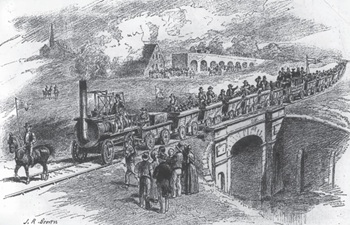
Heritage interests and operational requirements must be balanced.
Historic England publishes research into embodied carbon when retrofitting traditional buildings.

New Prime Minister delivers on ECA call for cut in electricity costs.

CIOB reacts to the announcement of Andy Burnham as Prime Minister.

Heritage and conservation science workforce survey - Have your say.

England's Suburbs 1820-2020. Book review.

New, more proportionate and targeted approach for higher-risk building assessments.
Government brings British Steel into public ownership.
UKCW Birmingham returns with bold new theme and focus.
New guidance published on competence requirements for self-certification schemes.
Construction Management, 8 July
NEETs crisis drives interest in trades, but apprenticeships barriers remain.